
Healing Spaces · Oncology & Clinical Healing
Softer hours on the hardest days.
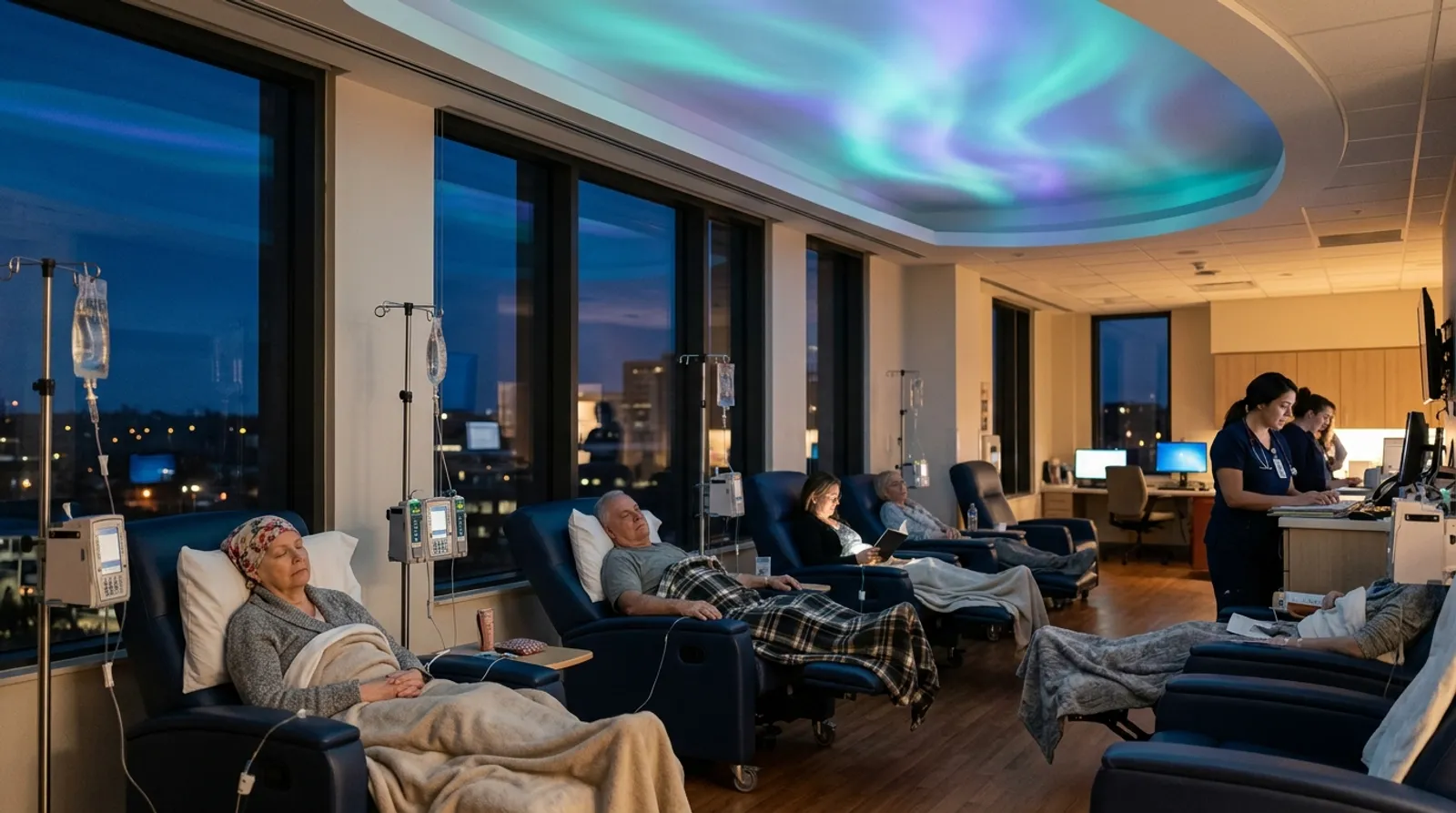
An infusion chair holds a person for hours at a time. The room around that chair matters. We design slow, quiet light for oncology settings: ceilings that drift instead of glare, walls that breathe instead of hum, scenes built to sit with someone through a long afternoon.
Who this serves
Cancer treatment centers, infusion suites, radiation oncology waiting areas, and family consult rooms.
What we build
- Infusion suite ceilings and sight lines designed around where patients actually look
- Low-stimulus scenes with no sudden movement, tuned in the room with your clinical team
- Waiting and consult room environments that lower arousal before difficult conversations
- Staff controls that return the room to clinical lighting instantly, every time
What changes
The goal is measurable comfort: patients who report easier sessions, families who breathe lower in the waiting room, staff who keep a calmer floor. We include observation protocols with every installation so your team sees the effect in your own numbers, not ours.
How it works
- Assessment. A free walk of your space with your program lead. We listen first.
- Design with your team. Scenes and fixtures specified with your clinicians and staff, to your protocols.
- Quiet installation. Non-destructive, scheduled around operations, calibrated at night in the real room.
- Training and tuning. Every shift learns the controls, and we return to tune once the room is lived in.
Common questions
Does this interfere with clinical equipment or lighting?
No. Everything is standard low-voltage lighting equipment, mounted without construction, and clinical lighting always overrides with one control.
How disruptive is installation?
Installations are scheduled around your operations, including nights and weekends, and a typical suite is calibrated in one visit with your staff present.
Can one room be a trial?
Yes. Many facilities start with a single infusion bay or consult room, or run our mobile program first, and expand from what their own observation data shows.
Start with a conversation.
A free assessment, in person, with the person who runs your program. No pitch deck, just a walk through the space and an honest plan.