Light for Kids
Shared with you by
Give a child
a calmer room.
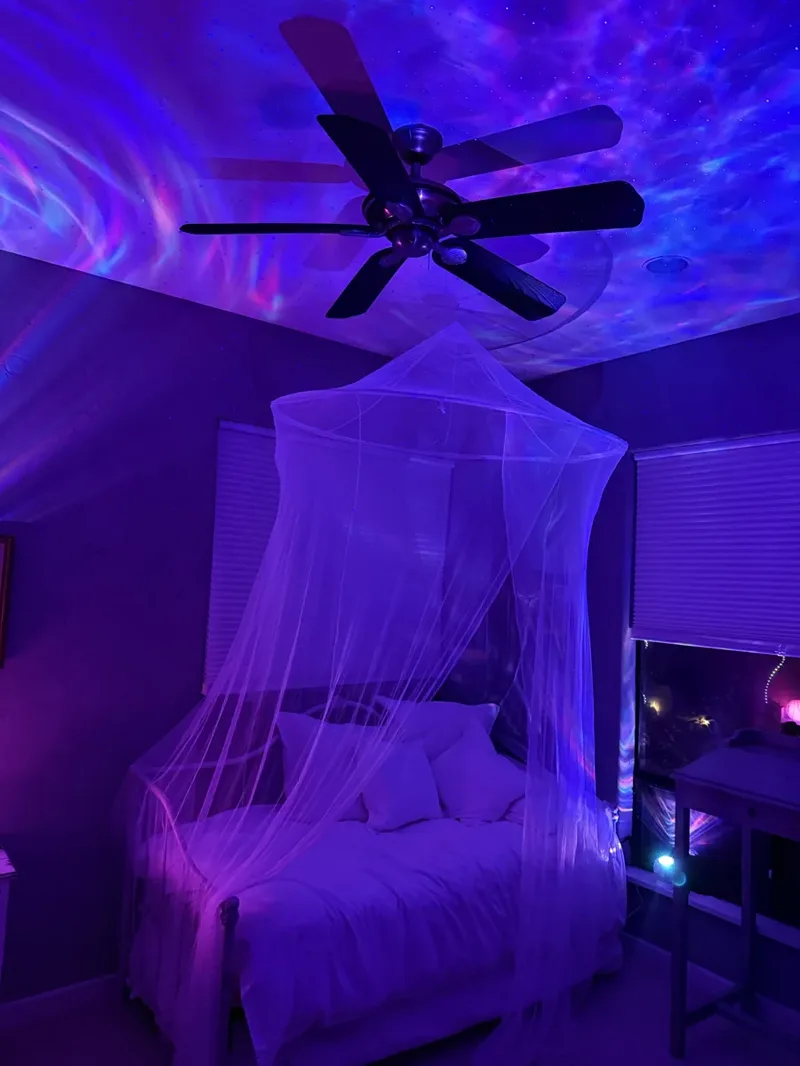
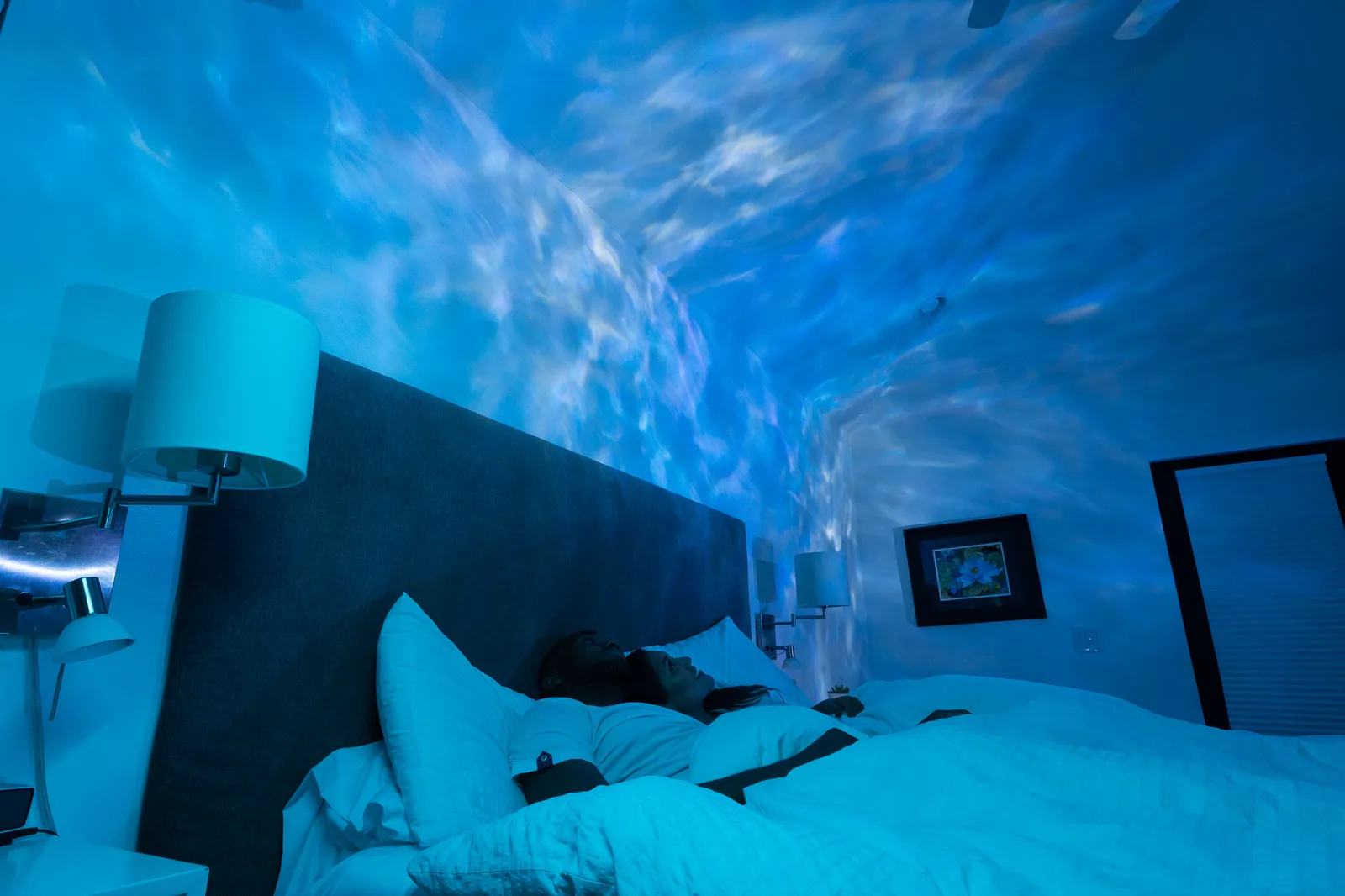
A slow, warm light that drifts across the ceiling of a hospital room or a bedside at home. Sponsored by people like you. Placed by nurses, doctors and therapists who know what a strange room at night does to a child.
Light for Kids
Confirming your sponsorship…
One moment while we hear back from the payment.
Your receipt is in your inbox. Bliss Productions is a public benefit corporation; the receipt is for a sponsorship purchase, not a charitable contribution.
The program is new. The first lights go out through practitioners in Maui and San Diego. Yours can be one of them.
Why a light
A hospital room is the last place a child can rest.
Overhead fluorescents, monitors, a door that opens all night. Harsh, flat light keeps a small nervous system on alert when it most needs to stand down.
A child who cannot sleep in a strange room fights treatment, fights the bed, fights the dark. The room can carry some of that instead of the child.
Whoever is in the chair beside the bed is reading the room as well. When the ceiling slows down, the whole room breathes out.
The children I work with typically squirm and move around during treatments. Once I had my room set up, the kids remained calm and just watched the experience during their session.
Our one clinician testimonial to date, from a pediatric acupuncture practice; not yet from an inpatient hospital unit. First name only is how she's credited across our site; email us and we confirm her full name, credential and practice directly within one business day.
Published research on low-stimulus, multisensory care environments reports calmer behaviour and less distress; see the research summary at bliss-productions.com/research.
What a sponsored light is
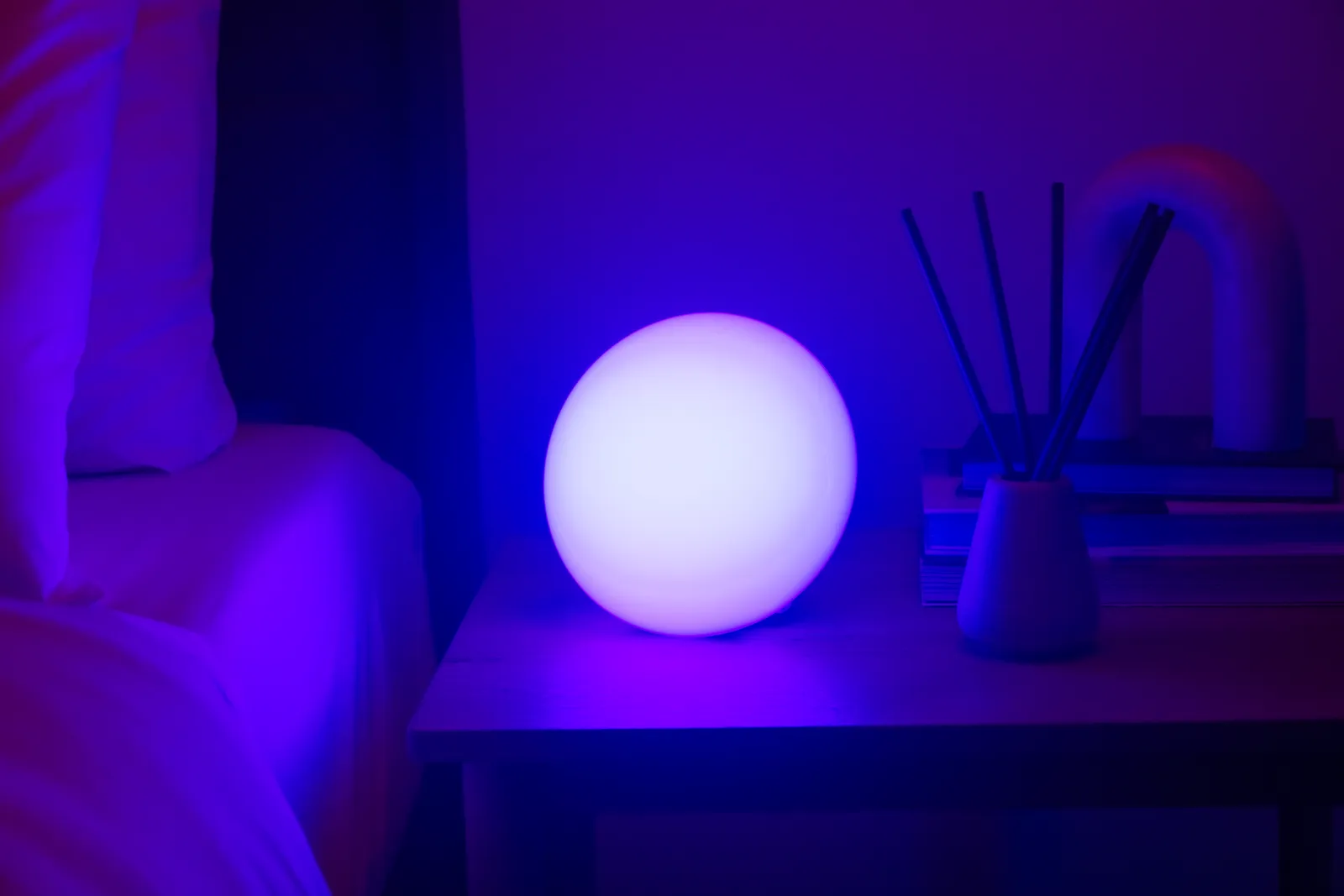
Slow colour on the ceiling. Nothing loud, nothing bright.
- Built to calm. Slow motion, warm colour, organic patterns drawn from sky, water and aurora. Never a strobe, never a spectacle.
- Safe in a room that has to be safe. Low voltage, cool to the touch, silent, no flicker, its laser aimed only at the ceiling or wall, never at a face. A housing that wipes clean.
- Simple for the care team. One control, set up in minutes, no installation. It runs through the night, including routine vitals and med checks under the room light, nothing to switch off or reset. Placed with the nurses, never over equipment.
- Theirs to keep. The light goes home with the child. The calm does not end at discharge.
The laser at the heart of our work was tuned, from its very first iterations, around a child who was afraid of the dark. Read the Bliss story.
How it works
Three steps, one calmer night.
Sponsor a light
Choose what to give.
No charge was made. Pick up where you left off whenever you are ready.
Every dollar pools toward the next light.
Online sponsorship is not switched on yet. Email us and we will arrange it by hand.
For hospitals and clinics
Bring calm to your patient rooms.
For child life specialists, nurse managers and clinic owners: pilot the light in one room, a treatment bay, or a ward lounge. Sponsored lights can cover it at no cost; if funding has not caught up when you are ready, tell us on the form below and we will give you a straight answer and a real start date. Prefer a tax-deductible gift over a purchase? Our nonprofit partnership below is open to a hospital-driven gift too.
No hospital has piloted Light for Kids yet. The first to start becomes our reference: the first case study, the first hospital photography, the first call the next hospital can make, always with your team's review and written approval before anything is published, and photography stays patient-free unless your own consent process says otherwise. We back that with real founding-hospital terms, set by you, not us: an especially generous no-obligation window, sign-off on how you're credited before anything goes public, and a lower or waived liability cap on a lost or damaged loaner (spelled out below), open for discussion given the extra risk of going first.
- A pilot, not a project. A small starting set of lights, sized with you to the room or unit you begin in, not a fixed number set in advance. Placement adapts to the setting: a NICU starts from your own cycled-lighting protocol and preterm-photosensitivity screening; a behavioral-health unit starts from your ligature- and tamper-resistance requirements for mounting hardware. A shared room gets its own call with nursing and child life (does it suit both patients, does a roommate's rest preference or a chart flag rule it out); where that can't be resolved, the light goes in a single-bed room instead. We work all of this through with your biomedical and unit staff rather than assume a shelf-mounted default fits everywhere. The pilot itself: a video-call walkthrough, a written guide with a simple log for which loaner unit is in which room, and a one-page observation sheet so your team can see the effect for itself.
- Nothing to install. No wiring, no ceiling work, no downtime. Pilot lights are loaners for the run of the pilot, wiped down and reassigned to the next room between patients, except an isolation-precaution or immunocompromised room, where a unit stays dedicated to that room instead of moving. (A light sponsored through the form above is different: it goes home permanently with the one child it was sponsored for.)
- Fits your rules. Low voltage, cool, silent, wipeable, laser aimed at the ceiling and never at a face, placed with your team, never over equipment or in a sightline that matters.
- Your own staff place it. For a hospital pilot, only your credentialed staff handle and place the light; our practitioner network never sends anyone into your building. That holds for individual sponsorships too: any light placed inside your hospital, an inpatient bedside included, still needs your hospital's own device and safety sign-off. Before we activate a give page for hospital-affiliated staff, we get a named hospital contact on file, so that sign-off has someone on your side to reach.
- Documentation, not assurances. Full spec and safety documentation (see the FAQ's safety answer for what it covers) goes to your biomedical engineering, infection control and bedside teams ahead of the pilot, named in the real document your team signs off on, not summarized on this page. Ask for it any time, along with a sample pilot agreement and our current certificate of insurance, including before you fill out the form below.
- No patient data changes hands. We track a pilot by hospital and by sponsor, not by patient: nothing that identifies who receives a light, a name, a diagnosis, a room assignment tied to an individual, ever reaches us. If your own compliance review decides a Business Associate Agreement is still the right paperwork to have on file, ask and we will put one in place before a pilot starts.
- Plain terms, spelled out. You and we set the pilot's length and end terms in writing before a light ships. Liability runs both ways in that same agreement: what you owe us if a loaned light is lost or damaged, capped at one unit's price shown above, and what we owe you if the device causes harm to a person or to hospital property, backed by our own general and product liability coverage; your hospital's protection under that policy is confirmed in the signed agreement, with the carrier and limits on the certificate of insurance mentioned above. If sponsorship has not caught up when you are ready to start, self-funding is invoiced like any vendor bill: net-30 against the signed agreement, with the W-9 and bank details your AP team would ask any new vendor for, at the same $180 per light. That invoice pays for the light's place in the pilot, not the hardware: it is still a loaner, wiped down and reassigned between rooms like any pilot unit, and returned or reassigned when the pilot ends. Keeping hardware permanently is the separate "path to more" conversation below.
- One person to call. A light that will not settle during a pilot gets a direct response: email info@bliss-productions.com and a person, not a queue, answers within one business day. A unit that stays faulty is swapped, not just repaired.
- Your own page, your own credit. Ask for a give page, the same kind a nurse, physician or therapist gets. Sponsorships raised through it, whether from a stranger, your own team, or your hospital's donors, are placed with your patients and tracked back to you, not the general pool.
- A path to more. When a pilot works, a permanent installation for a family room or waiting area is the next conversation, on your timeline.
This is not the studio's first installation. See completed, paid work across venues and homes at bliss-productions.com/work.
See our pediatric environments →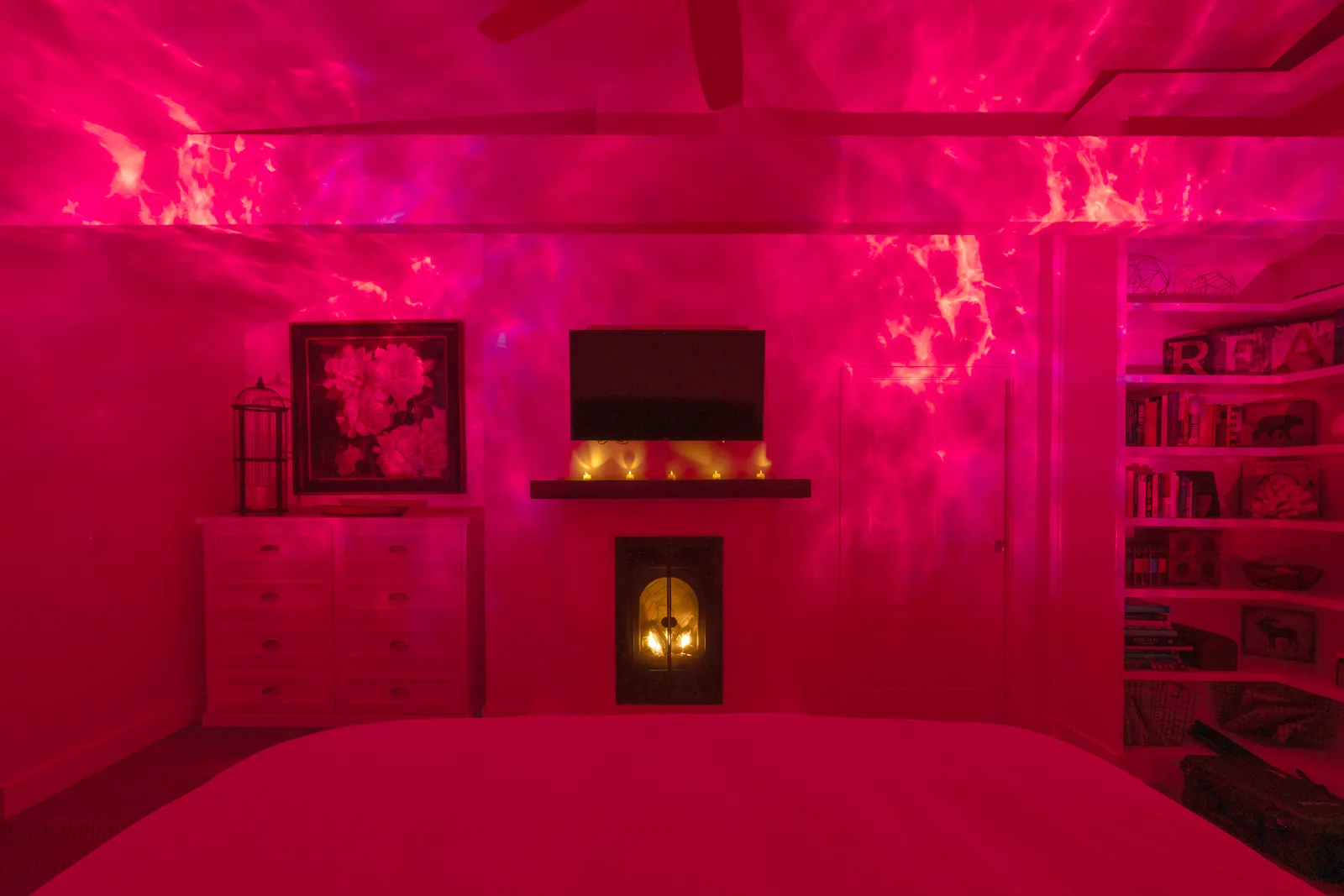
Questions people ask
Is a sponsorship tax deductible?
Sponsorships are processed by Bliss Productions, a public benefit corporation, as the purchase of a light on a child's behalf, so the receipt is a sales receipt, not a charitable one. For a tax-deductible gift, we route it through our ongoing fiscal-sponsor partnership with Grassroots Aid Partnership, a 501(c)(3). Write to info@bliss-productions.com, before or after you pay, and within two business days they issue your gift receipt directly, with their registration details sent in writing so your own team can verify it.
Where does my light go?
To a child in care through a nurse, physician or therapist in our network. If you came here from a practitioner's page, your light is placed through that practitioner, with the patients in their own care, not the general pool. You get an email when it is in a room.
Can I sponsor in someone's name?
Yes. Add a dedication and it goes on the note that travels with the light; our own team reads every note before it goes out. You can also keep your own name off that note.
What does the child actually receive?
A calming light of their own: slow, warm colour that drifts across the ceiling and walls, one simple control, set up in minutes by their care team. It goes home with them.
Is it safe in a hospital room?
The light source is a laser projector: low voltage, cool to the touch, silent, never strobes or flickers, and mounted so the beam washes the ceiling or a wall only, never a face, a crib, or eye level. It is a decorative, ambient-lighting product, not a medical device, and makes no claim to diagnose, treat, cure or prevent any condition. Placement follows the unit's own rules with the care team, never over equipment, and any patient with a seizure, photosensitivity, or sensory-processing history should be cleared by the treating team first using our chart-flag guidance. Ask any time, including before a first call, for the light's full spec and safety documentation: laser classification, electrical and product safety listing status, disinfectant compatibility, and that chart-flag guide, sent to your biomedical engineering and infection control teams ahead of a pilot. In a hurry for a first-pass triage? Ask for just the laser classification and listing status by email and we answer in writing within one business day.
I am a nurse, physician or therapist. How do I take part?
Ask us for your own give page. It carries your name, tracks every light sponsored through you, and gives you this page as a deck to present from a phone or a printout. If you are hospital-affiliated, we get a named contact at your hospital on file before your page goes live for in-facility placement. The rule: a light placed with a child at their own home is your own clinical judgment; a light placed anywhere inside your hospital, an inpatient bedside included, needs your hospital's own sign-off first, the same documentation, insurance and agreement steps a formal pilot goes through, not just your own say-so as staff.
Nurses, physicians, therapists
Carry the light into your community.
Your own give page carries your name, tracks every light sponsored through you, and turns into a deck you can present from a phone. Ask us for one.
Ask for a give page